








DEPARTMENT OF
Civil Engineering
The Department of Civil Engineering at SSET, established in 2001, is characterized by its dedicated and experienced faculty. It offers both undergraduate and postgraduate programs in Civil Engineering, specializing in Computer Aided Structural Engineering and Environmental Engineering. The department’s teaching approach emphasizes professional ethics and service learning, integrating community service with instruction. Interactive sessions with industry experts, seminars, workshops, and conferences keep students and faculty updated on industry trends. The department’s seven well-equipped laboratories support research activities and consultancy projects for government and non-government organizations. Notable projects include site surveys, road surveying, and environmental impact assessments. Additionally, the department collaborates closely with SCMS Water Institute (SWI), contributing to sustainable water management and community development. SWI’s consultancy work, such as water auditing, rainwater harvesting, and disaster preparedness planning, provides students with valuable real-world experience. The success of the department’s alumni in academia, industry, and government organizations globally attests to the quality of education provided. In summary, the Department of Civil Engineering at SSET is dedicated to providing a holistic education that emphasizes practical experience, community engagement, and research, benefiting both its students and the community it serves.
Vision
- To emerge as a premier department, empowering Civil Engineering professionals and research-oriented innovators for sustainable development.
Mission
M1: Impart industry-relevant Civil Engineering education that promotes ethical conduct and lifelong learning.
M2: Develop innovative problem-solving skills to address societal needs and
environmental challenges in infrastructure development.
M3: Enhance service learning and research through collaboration with government departments and local bodies.
POs,PSOs,PEOs
| Program Outcomes | |
|---|---|
| PO1 | Engineering Knowledge: Apply knowledge of mathematics, natural science, computing, engineering fundamentals and an engineering specialization to develop to the solution of complex engineering problems. |
| PO2 | Problem Analysis: Identify, formulate, review research literature and analyze complex engineering problems reaching substantiated conclusions with consideration for sustainable development. |
| PO3 | Design/Development of Solutions: Design creative solutions for complex engineering problems and design/develop systems/components/processes to meet identified needs with consideration for the public health and safety, whole-life cost, net zero carbon, culture, society and environment as required. |
| PO4 | Conduct Investigations of Complex Problems: Conduct investigations of complex engineering problems using research-based knowledge including design of experiments, modelling, analysis & interpretation of data to provide valid conclusions. |
| PO5 | Engineering Tool Usage: Create, select and apply appropriate techniques, resources and modern engineering & IT tools, including prediction and modelling recognizing their limitations to solve complex engineering problems. |
| PO6 | The Engineer and The World: Analyze and evaluate societal and environmental aspects while solving complex engineering problems for its impact on sustainability with reference to economy, health, safety, legal framework, culture and environment. |
| PO7 | Ethics: Apply ethical principles and commit to professional ethics, human values, diversity and inclusion; adhere to national & international laws. |
| PO8 | Individual and Collaborative Team work: Function effectively as an individual, and as a member or leader in diverse/multi-disciplinary teams. |
| PO9 | Communication: Communicate effectively and inclusively within the engineering community and society at large, such as being able to comprehend and write effective reports and design documentation, make effective presentations considering cultural, language, and learning differences |
| PO10 | Project Management and Finance: Apply knowledge and understanding of engineering management principles and economic decision-making and apply these to one’s own work, as a member and leader in a team, and to manage projects and in multidisciplinary environments. |
| PO11 | Life-Long Learning: Recognize the need for, and have the preparation and ability for i) independent and life-long learning ii) adaptability to new and emerging technologies and iii) critical thinking in the broadest context of technological change. |
| Program Specific Outcomes | |
|---|---|
| PSO1 | Apply community-engaged learning to identify and solve societal and infrastructure challenges. |
| PSO2 | Enhance professional competence through research and certifications. |
| PSO3 | Demonstrate competence in applying modern AI-enabled tools to optimally solve Civil Engineering problems. |
| Program Educational Objectives | |
|---|---|
| PEO1 | Graduates will establish successful professional careers with a commitment to lifelong learning. |
| PEO2 | Graduates will solve complex civil engineering problems through innovative and sustainable solutions. |
| PEO3 | Graduates will pursue professional practice, research, or higher studies, demonstrating collaborative and managerial competence. |
Placements
Placement summary
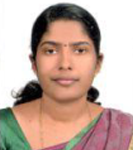
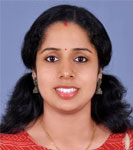
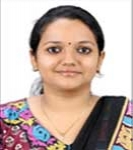
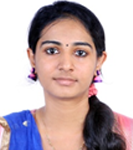
Faculty Members
Environmental Engineering
Computer Aided Structural Engineering.
COMPUTER AIDED STRUCTURAL ENGINEERING.
Environmental Engineering
Computer Aided Structural Analysis
Engineering.
M. Tech Traffic and Transportation Engg.
Assistant Professor Environmental Engineering
M.E STRUCTURAL ENGINEERING
Geotechnical Engineering
Traffic and Transportation Engineering
GEOTECHNICAL ENGINEERING
Geotechnical Engineering
Geomechanics and Structures
Environmental Engineering.
Structural Engineering and Construction Managemen
,Geo-technical Lab
Explore Civil
Work Based Learning
Work based learning strategy is adopted for providing the students with real life experiences where they can apply their academic and technical skills and develop their employability. Students develop the habit of group work through such excercises. Students are raised to the employment requirements of industry. Some of the on field works undertaken by students are enlisted in the following link.
Work Based Learning- Implemented Projects
Video 1:
Link - https://youtu.be/e900DKBM3Jc
Title: Design steps_simply supported beam
Description: RCC beam design procedure for beginners as per IS code (in Malayalam) - for S5 KTU Civil students
Video 2:
Link - https://youtu.be/o6Y3i6zedNE
Title: Design steps_Torsion
Description: RCC beam design procedure for beginners as per IS code (in Malayalam) - for S5 KTU Civil students
Alumni Testimonials
Ajith C B
Class of 2022
B.Tech, Civil Engineering
SCMS School Of Engineering & Technology
Antony Joh Moothedan
Class of 2017
B.Tech, Civil Engineering
SCMS School Of Engineering & Technology
Beshy Kuriakose
Class of 2006
B.Tech, Civil Engineering
SCMS School Of Engineering & Technology
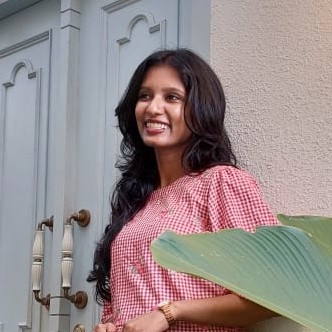
Careena Merine Jojius
Class of 2020
B.Tech, Civil Engineering
SCMS School Of Engineering & Technology
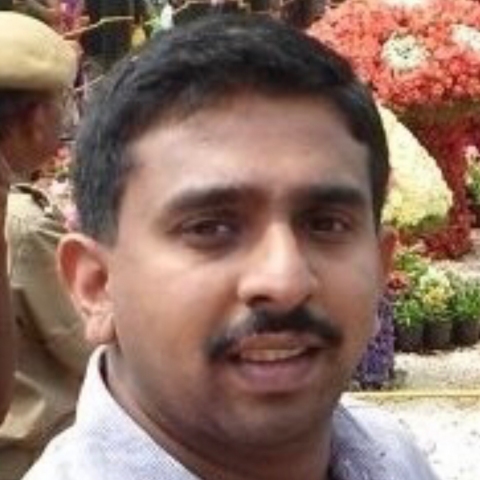
Dijo Mathew
Class of 2008
B.Tech, Civil Engineering
SCMS School Of Engineering & Technology