
























DEPARTMENT OF

Electronics & Communication Engineering

The department started in the year 2001 with an intake of 40 students. The B.Tech and M.Tech programs offered by the department were affiliated to Mahatma Gandhi University, Kottayam till 2015. From 2015 onwards, all the programs are affiliated to APJ Abdul Kalam Technological University (APJAKTU), Thiruvananthapuram, Kerala.

The department has also been recognized as a research centre for Ph.D. programme from 2016, affiliated to APJAKTU. Faculty with expertise in Electronic Circuits, Wireless Communication, Signal Processing, VLSI Design and Embedded systems work as a team to nurture students to acquire required skills, knowledge and competence through OBE. The department ensures that students have access to state-of-the-art laboratories and infrastructural facilities. The department promotes growth and development of students with focus on academic quality, professional relevance, entrepreneurship, needs of the corporate world and maintains a supportive environment.

Course Duration
0 yr
Alumni
0 +
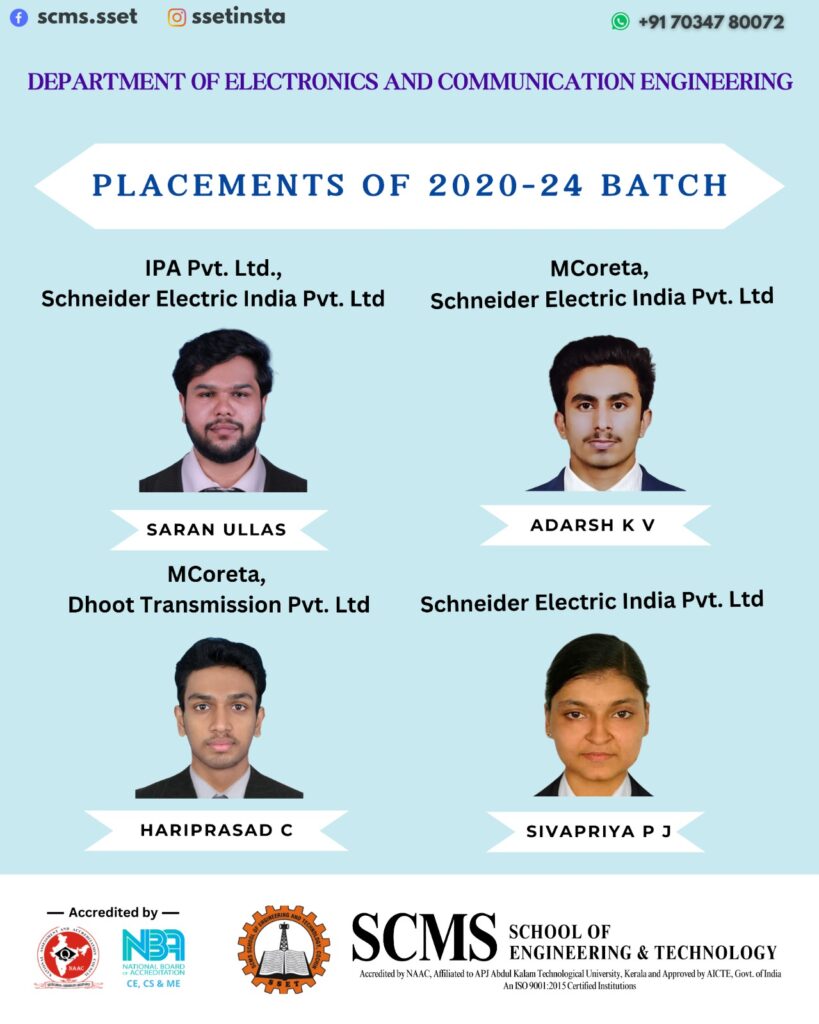
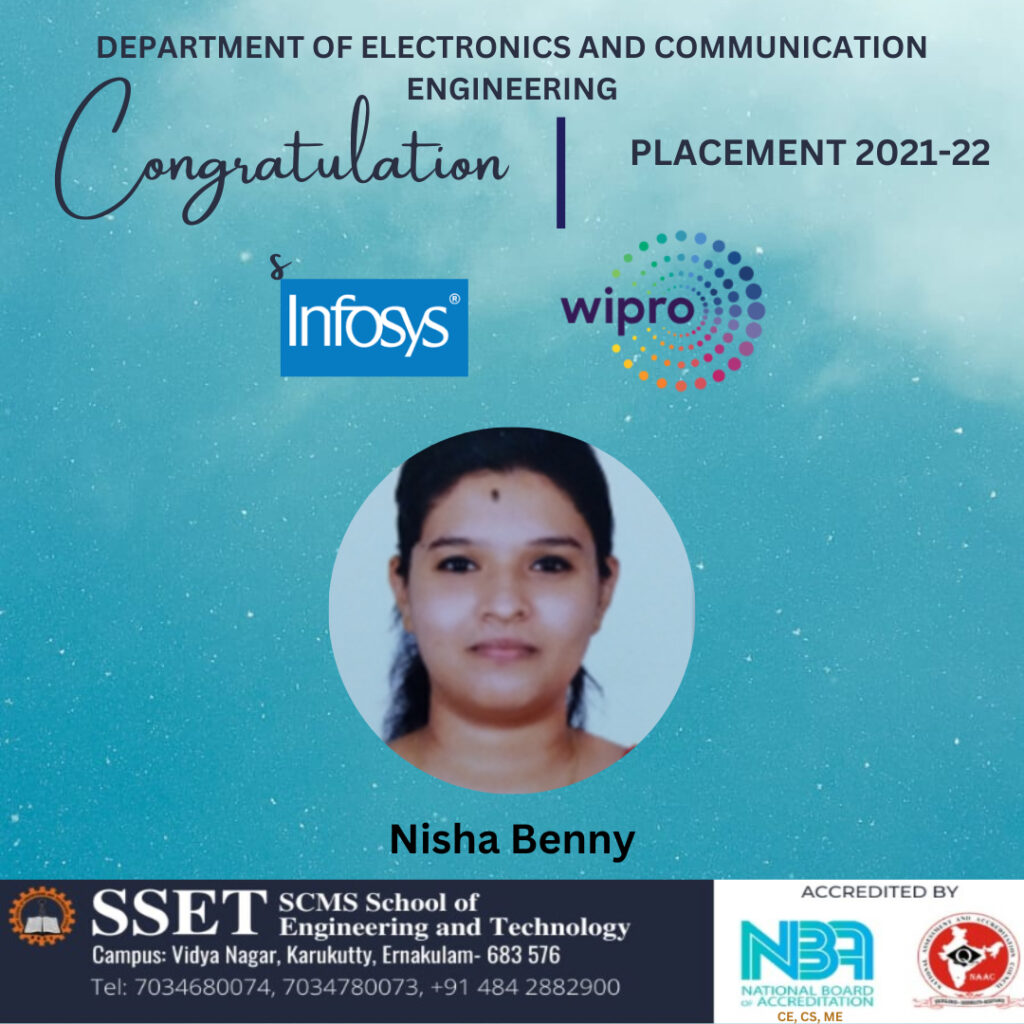
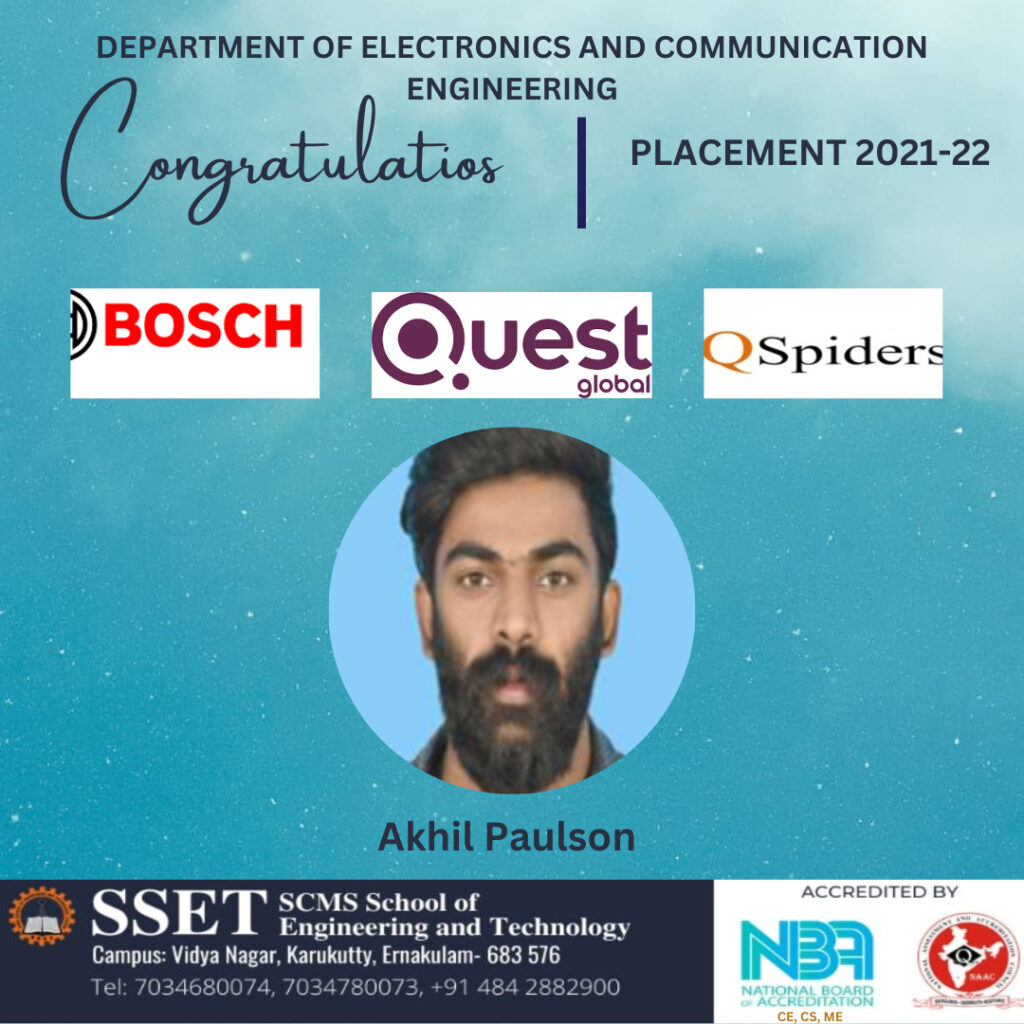
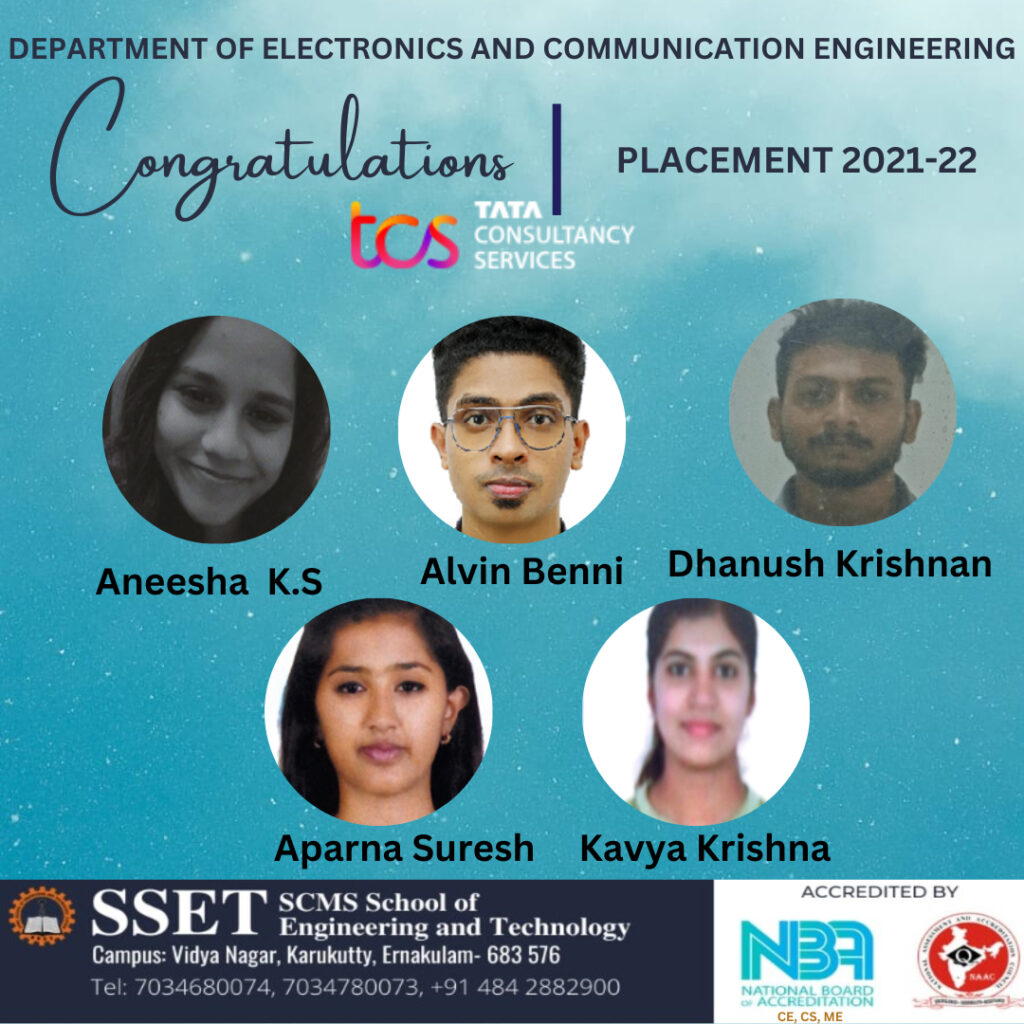
Placement Records
0 %

Vision

To become a premier Electronics Engineering Department driving innovation, research, and technological leadership for sustainable societal advancement.

Mission

The department aspires to:

M1: Impart quality Electronics Engineering education by strengthening core fundamentals and engaging with industry and society.

M2: Conduct and promote research in Electronics Engineering to develop practical and innovative technological solutions.

M3: Develop socially responsible professionals with ethical leadership qualities.

Department Information

  • International and national agency funded projects executed by the department as well as the ongoing projects together are worth ‘Rs 25 Lakhs’ in last 5 years.
  • The department received two Gandhian Young Technological Innovation (GYTI) award in 2018 and 2020.
  • Recognition from international agencies like IEEE Epics and IEEE SIGHT for doing socially relevant projects.
  • Financial assistance for student projects from CERD,APJAKTU.
  • 1st position award winners in AICTE-ECI ChhatraVishwakarma.
  • 3rd Prize in Third Dialogue India Academia Conclave’ in association with Make in India and AICTE held at IIT Delhi.
  • Faculty funding for CERD Research seed money from CERD, APJAKTU.
  • 1st in ‘Sastrayaan ’ CUSAT Project Competition.
  • IISc Bangalore, Social Innovation Challege winners with Funding.
  • Innovative Project funding from Research council of Oman.
  • KSCSTE funding for student projects.
  • Innovative socially relevant projects by faculty and students to tackle COVID2019.
  • 4 Patents in last 4 years.
  • Student driven start ups.


Programmes Section

POs,PSOs,PEOs

PO 1Engineering knowledge: apply the knowledge of mathematics, science, engineering fundamentals, and an engineering specialization to the solution of complex engineering problems.
PO 2Problem analysis: identify, formulate, research literature, and analyze complex engineering problems reaching substantiated conclusions using first principles of mathematics, natural sciences, and engineering sciences.
PO 3Design/development of solutions: design solutions for complex engineering problems and design system components or processes that meet the specified needs with appropriate consideration for the public health and safety, and the cultural, societal, and environmental considerations.
PO 4Conduct investigations of complex problems: use research-based knowledge and research methods including design of experiments, analysis and interpretation of data, and synthesis of the information to provide valid conclusions.
PO 5Modern tool usage: create, select, and apply appropriate techniques, resources, and modern engineering and it tools including prediction and modelling to complex engineering activities with an understanding of the limitations.
PO 6The engineer and society: apply reasoning informed by the contextual knowledge to assess societal, health, safety, legal and cultural issues and the consequent responsibilities relevant to the professional engineering practice.
PO 7Environment and sustainability: understand the impact of the professional engineering solutions in societal and environmental contexts, and demonstrate the knowledge of, and need for sustainable development.
PO 8Ethics: apply ethical principles and commit to professional ethics and responsibilities and norms of the engineering practice.
PO 9Individual and team work: function effectively as an individual, and as a member or leader in diverse teams, and in multidisciplinary settings.
PO 10Communication: communicate effectively on complex engineering activities with the engineering community and with society at large, such as, being able to comprehend and write effective reports and design documentation, make effective presentations, and give and receive clear instructions.
PO 11Project management and finance: demonstrate knowledge and understanding of the engineering and management principles and apply these to one’s own work, as a member and leader in a team, to manage projects and in multidisciplinary environments.
PO 12Life-long learning: recognize the need for, and have the preparation and ability to engage in independent and life-long learning in the broadest context of technological change.

The Electronics and Communication Engineering graduates will be able to

PSO1Design and implement electronics and communication systems using domain- specific platforms and technologies to solve industrial challenges
PSO2Develop research skills to analyze, design, and innovate electronics and communication systems for engineering applications.
PSO3Work effectively in multidisciplinary teams to develop sustainable electronics and communication systems.

To prepare students to

PEO1Graduates will establish successful careers in Electronics Engineering and related fields by applying strong fundamentals and EDA tools.
PEO2Graduates will pursue higher studies and research to develop practical and effective technological solutions in Electronics Engineering.
PEO3Graduates will demonstrate leadership in professional practice and contribute to societal development through innovative engineering solutions.

VLSI (PSOs, PEOs)

The Electronics Engineering (VLSI Design and Technology) graduates will be able to

PSO1Design and implement digital and analog VLSI systems using modern semiconductor design tools to meet industry specifications.
PSO2Develop research skills to analyze, design, and verify VLSI circuits and systems using electronic design automation (EDA) and simulation tools.
PSO3Work effectively in multidisciplinary teams to develop sustainable VLSI systems for technological applications.

To prepare students to

PEO1Graduates will establish successful careers in Electronics Engineering and related fields by applying strong fundamentals and EDA tools.
PEO2Graduates will pursue higher studies and research to develop practical and effective technological solutions in Electronics Engineering.
PEO3Graduates will demonstrate leadership in professional practice and contribute to societal development through innovative engineering solutions.

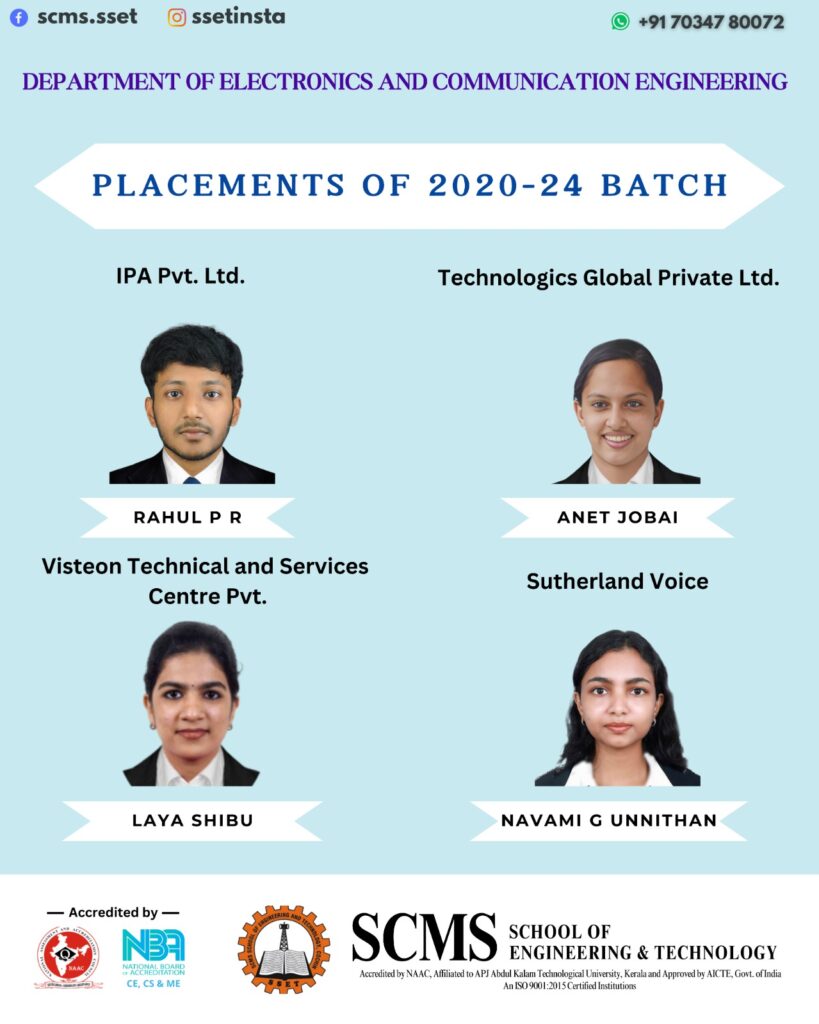
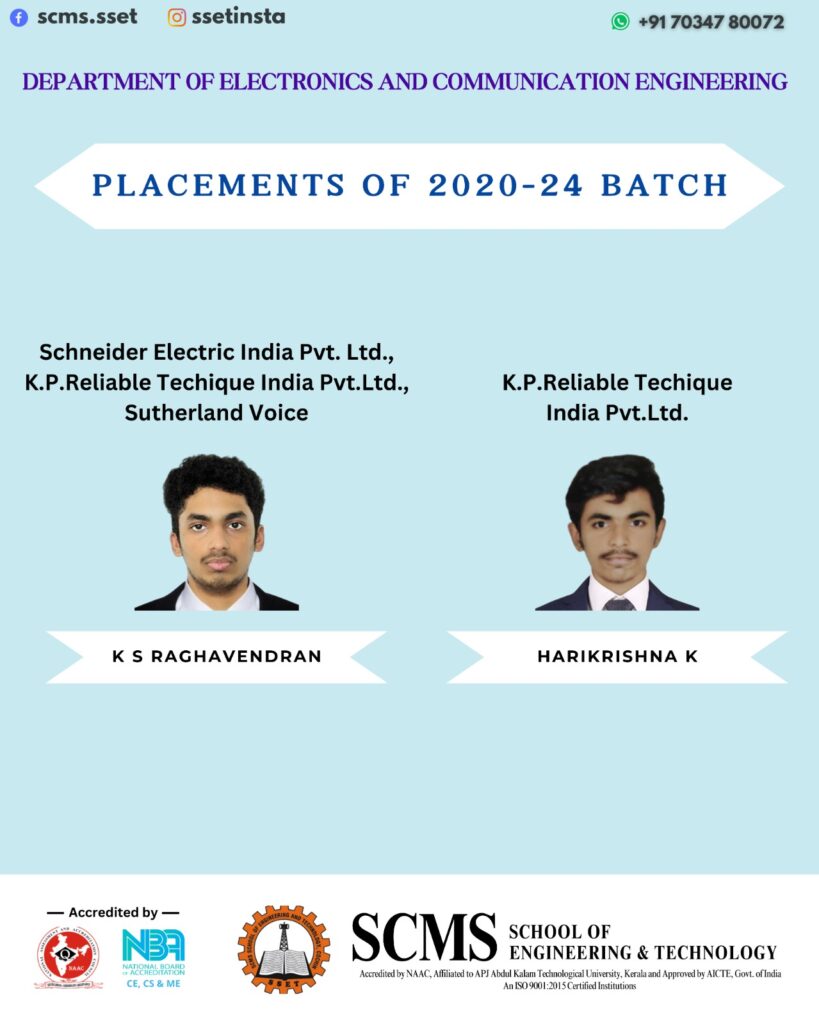
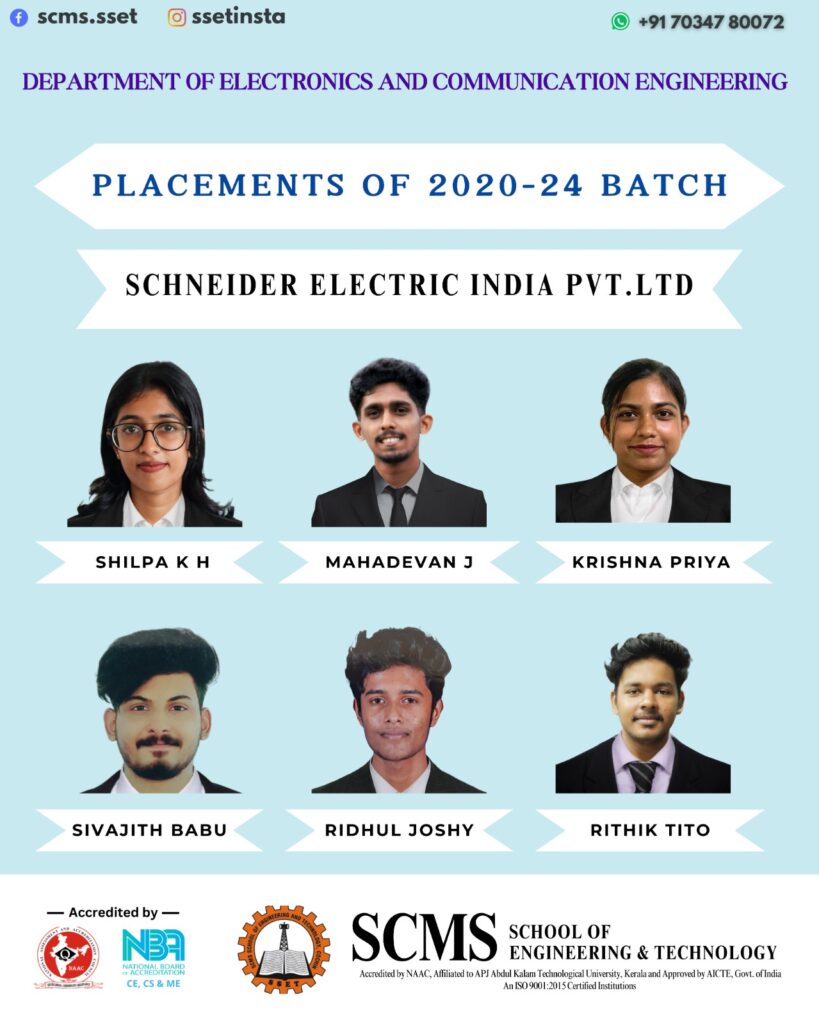
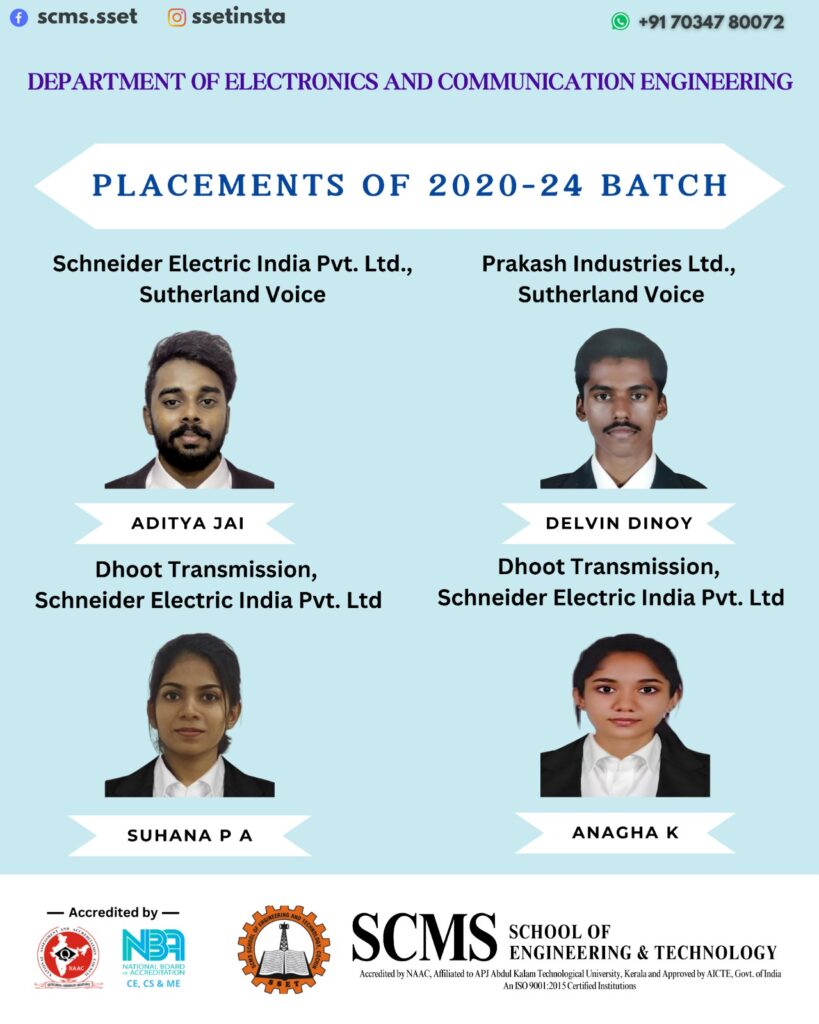
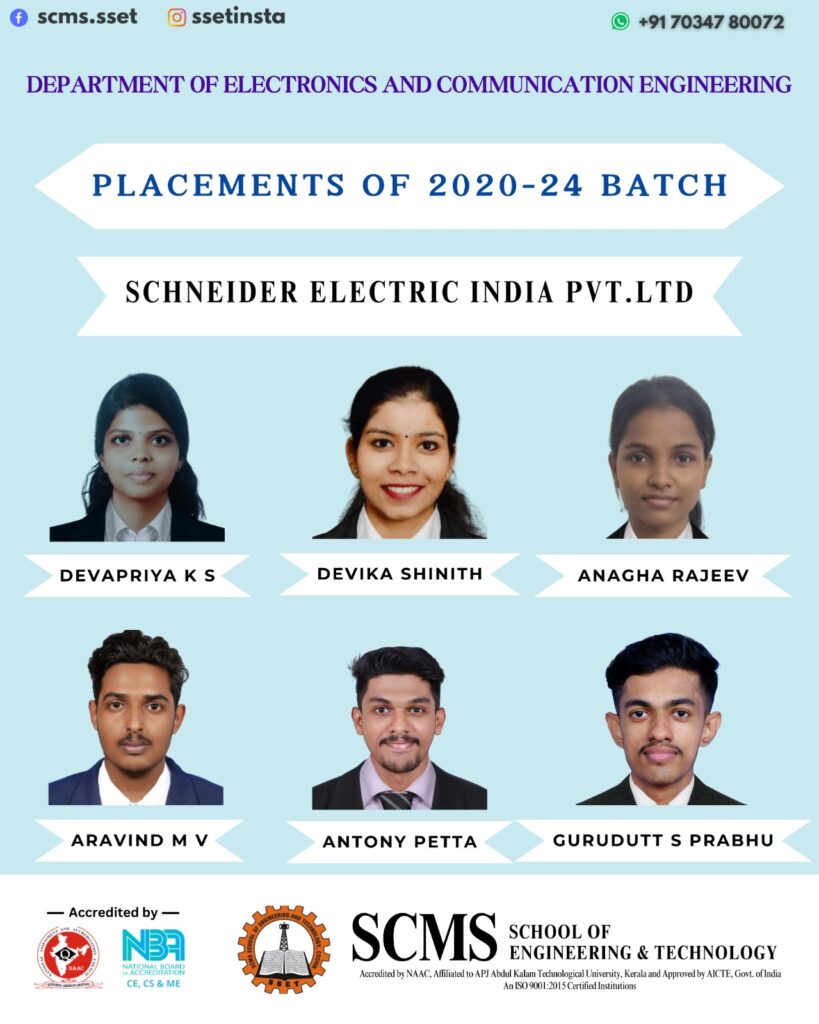
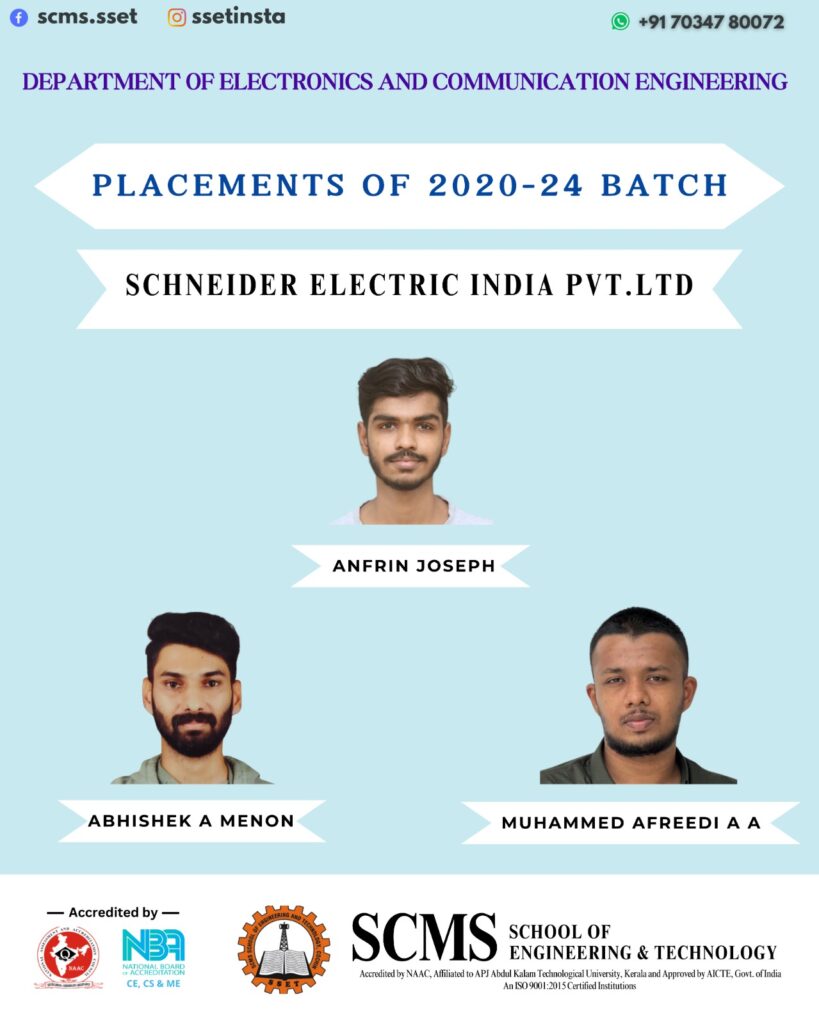
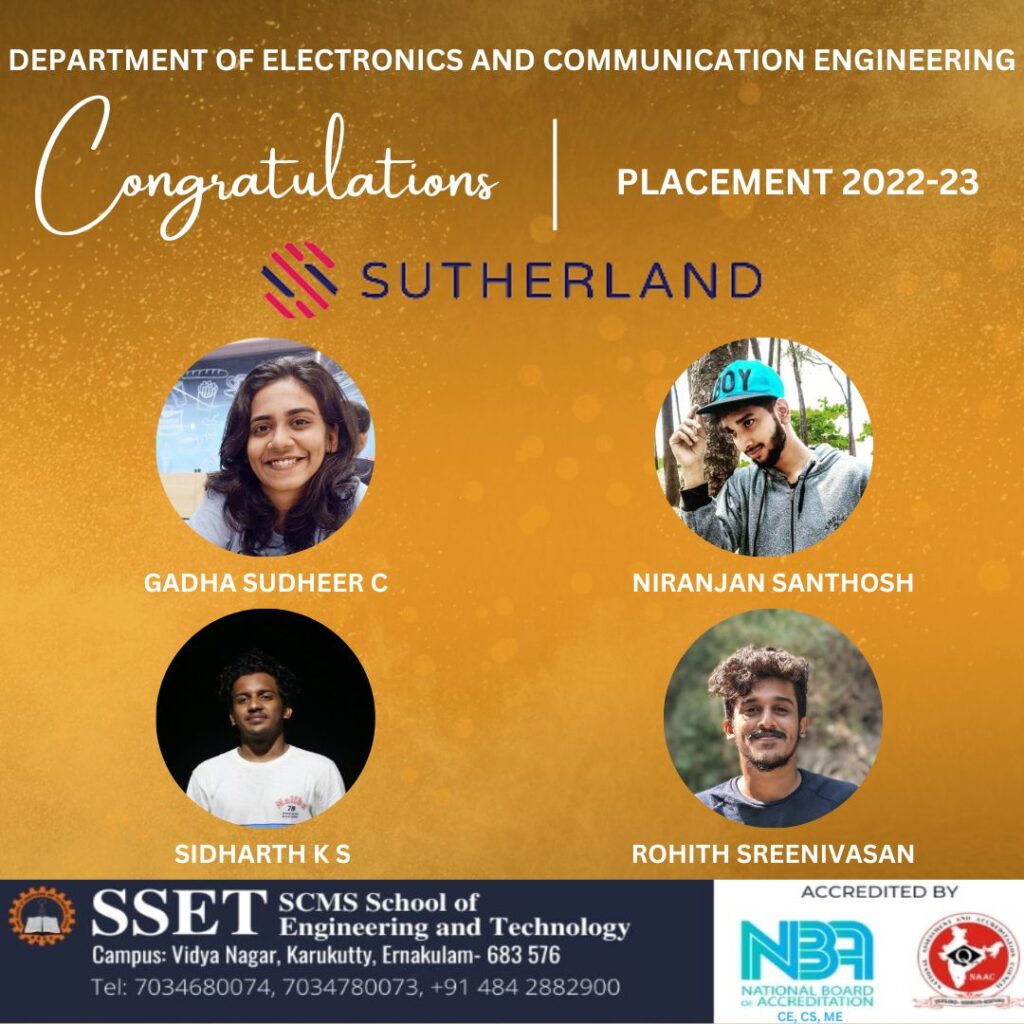
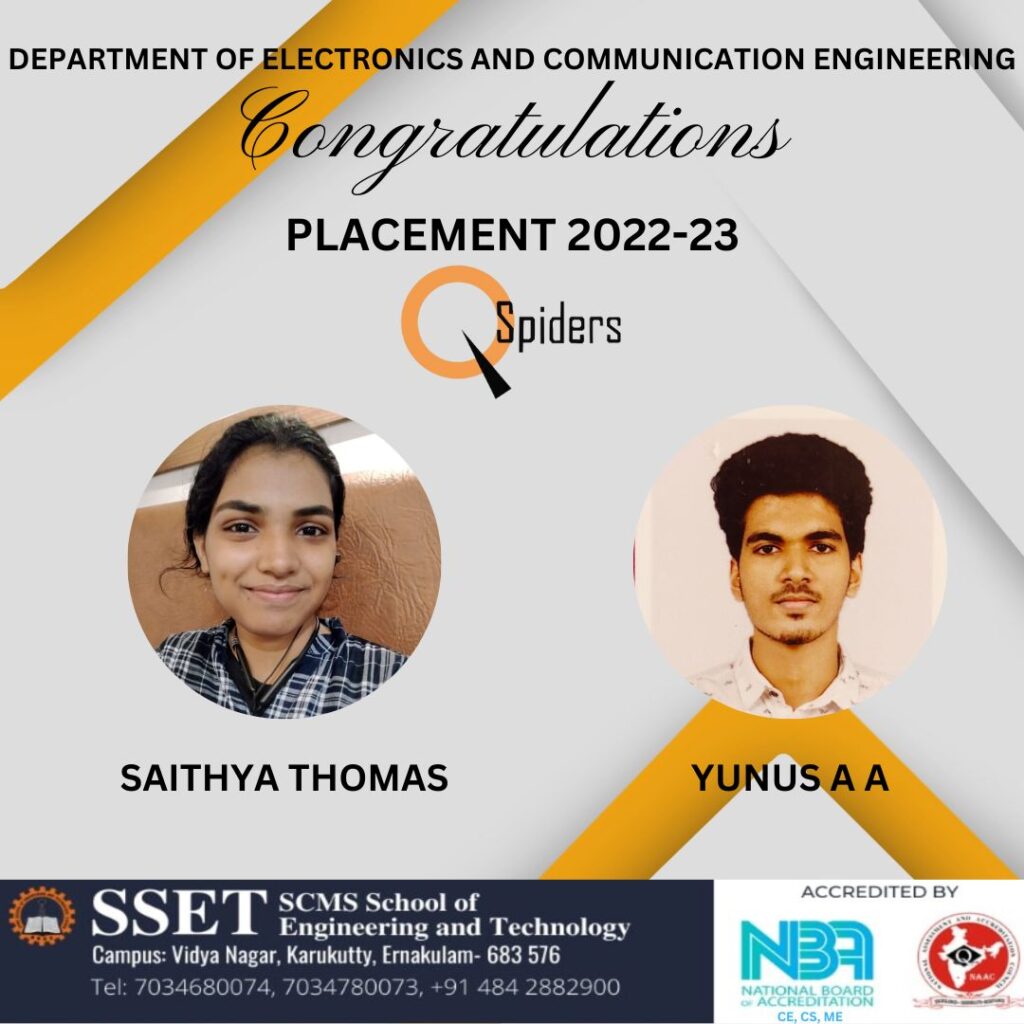
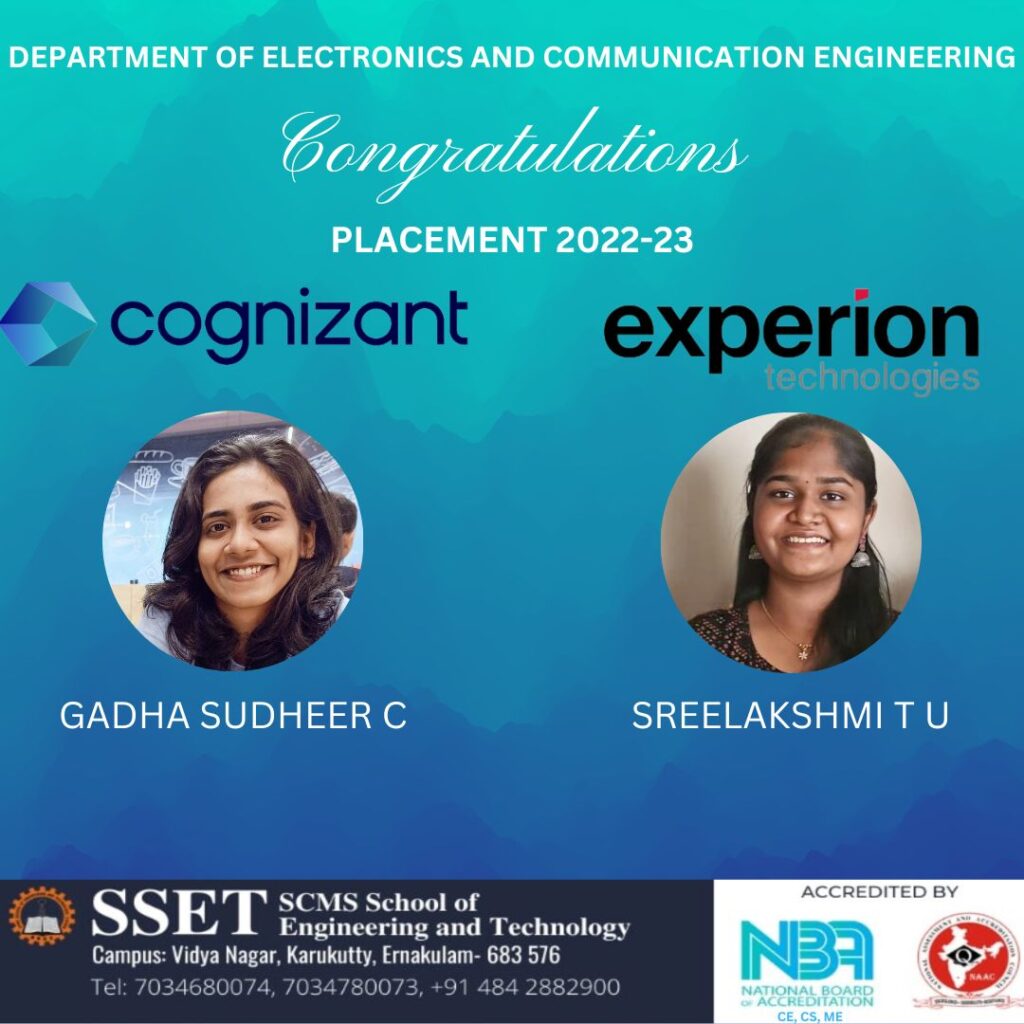
Placements

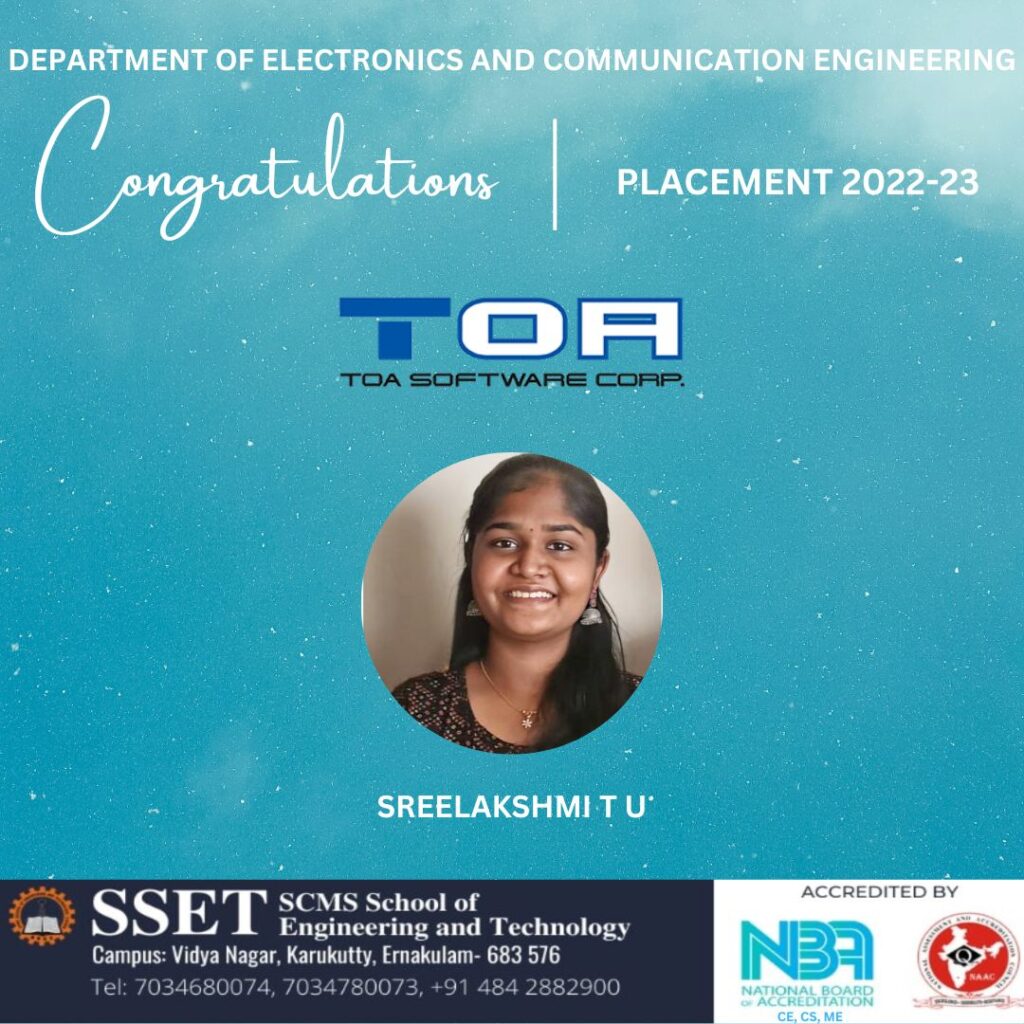
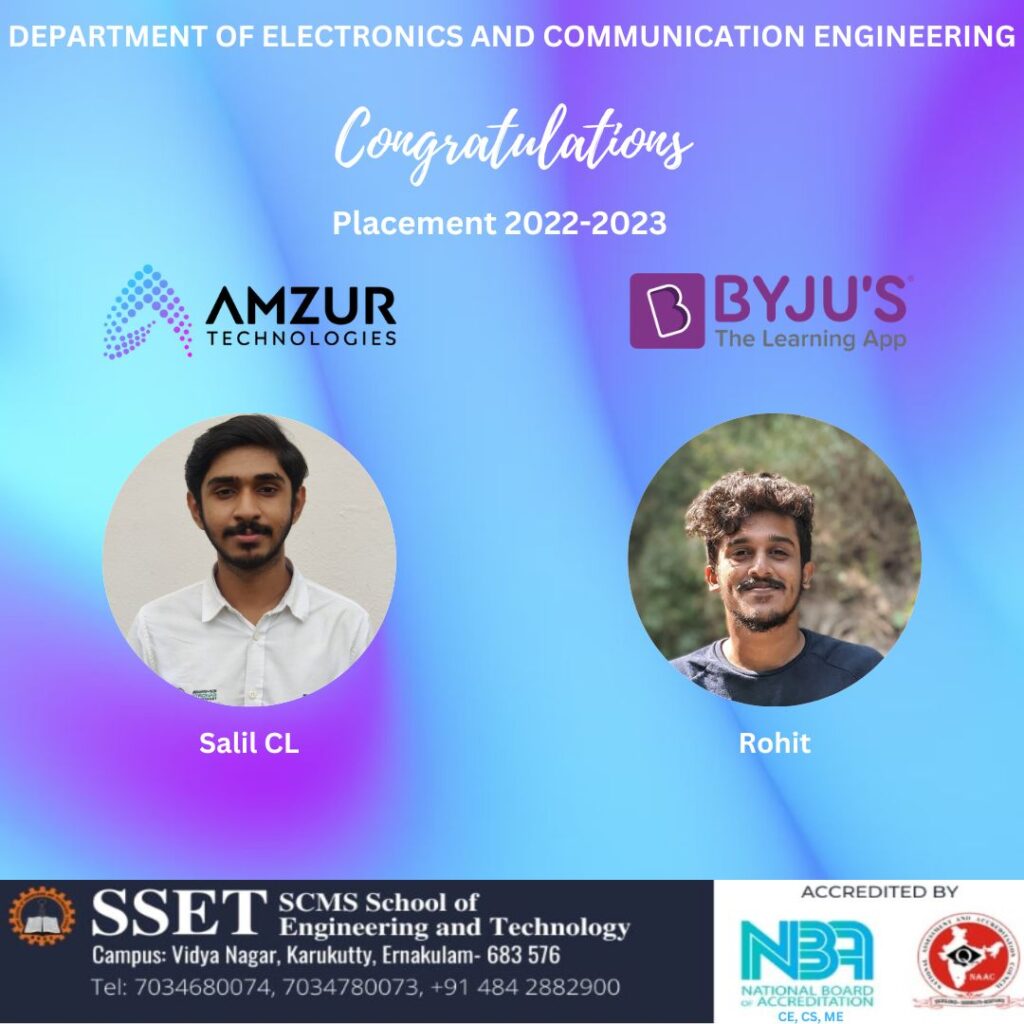
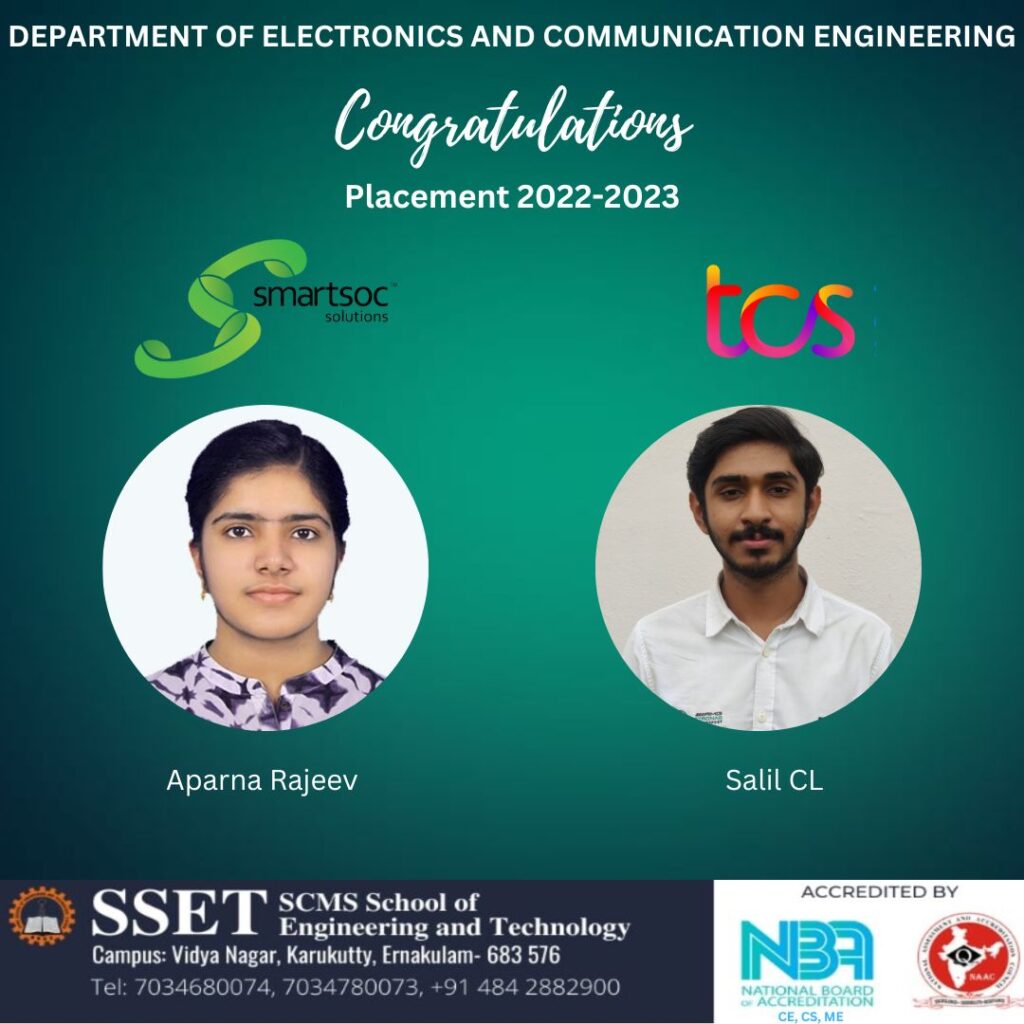
Salil CL 2022-23

Rohit 2022-23

Aparna Rajeev 2022-23

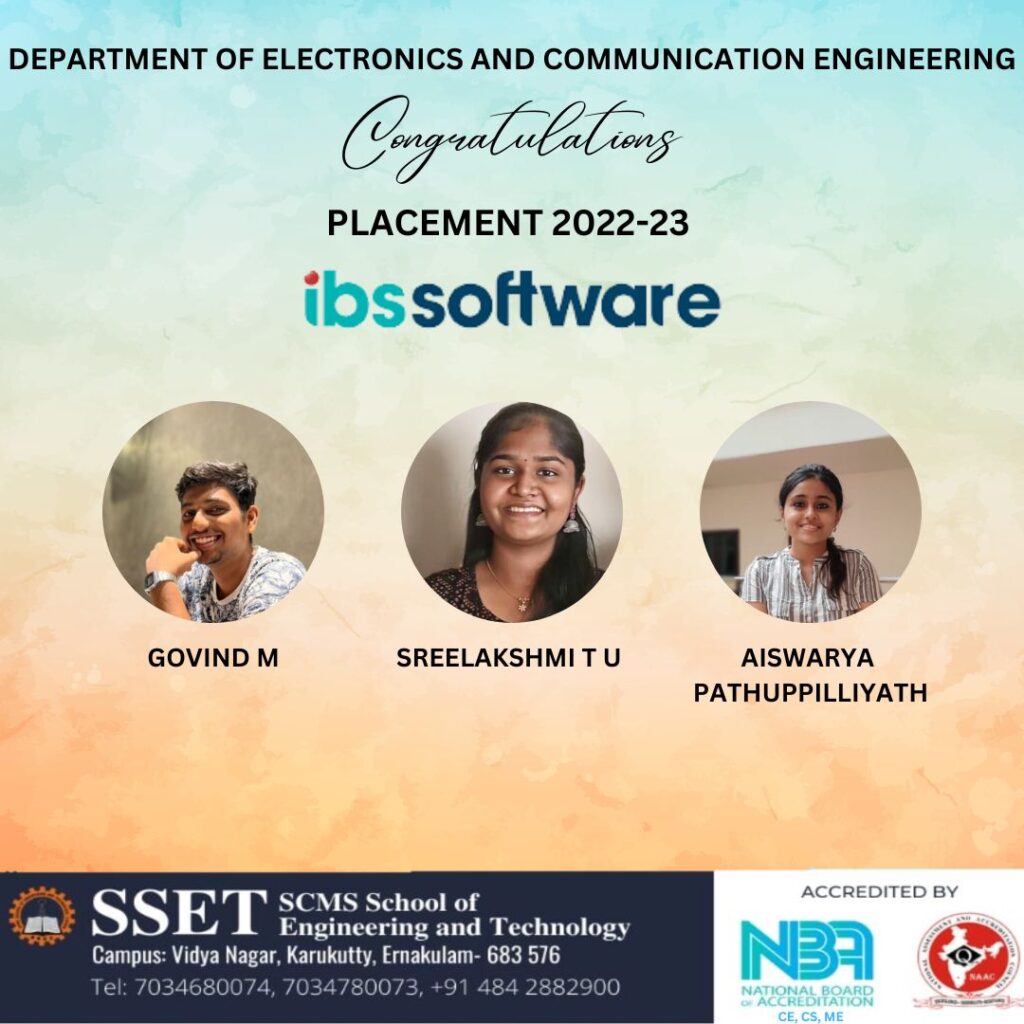
Govind M 2022-23

Aiswaraya pathupilliyath 2022-23

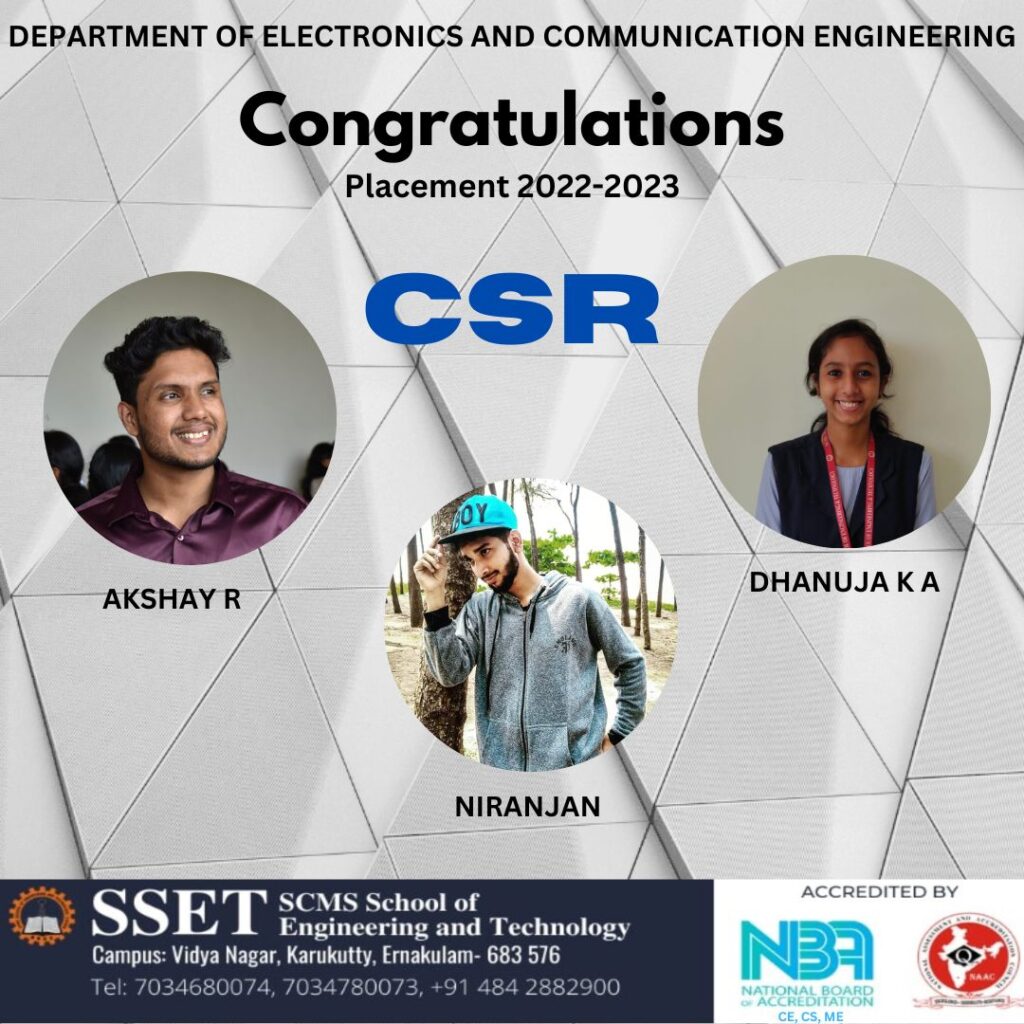
Ashay R 2022-23

Niranjan 2022-23

Dhanuja K 2022-23

Gadha sudheer C 2022-23

Rohith sreenivasan 2022-23

Saithya thomas 2022-23

Placement Gallery

Placement summary

2020-2021
0 +
2021-2022
0 +
2022-2023
0 +

Faculty Members

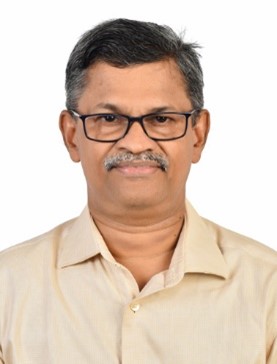
Dr. Deepak K. S. Professor and HOD
Wireless Communication and Networks
Dr. Anandhi V Associate Professor
Applied Electronics
Dr.Parvathy M Associate Professor
Low power VLSI
Vrinda .V Gopal .T Assistant Professor
Electronics and Communication Engineering
Praveena S Kammath Assistant Professor
VLSI and Embedded Systems
Nithya .M Assistant Professor
Communication Systems
Sreeja K A Associate Professor
r VLSI &Embedded systems
Lekshmi Nair M Assistant professor
ECE
Retty George Assistant Professor
VLSI & Embedded Systems
Mary Catherine V.G Assistant Professor
M.Tech in VLSI and Embedded Systems
Ajit Joseph Assistant Professor
Optical Communication
SUKANYA SINGH M J Assistant Professor
Ms.Sandhya Venugopal Assistant Professor
Ms.Chelsy Joy Assistant Professor
Ms.Shaila C.K. Assistant Professor
Ms. Athira Anilan Assistant Professor
Ms.Hridya R.P. Assistant Professor
Ms.Vishnupriya V Assistant Professor
Mr.Unnikrishnan P. Assistant Professor
Amrutha Joshy Assistant Professor

Technical Staff Members

Ms.Renjy P L Lab Instructor Grade- II
JYOTHYLEKSHMI.S Lab Instructor
Smitha. P.C Lab Instructor
Ms.LASITHA V Lab Instructor

Explore ECE

Alumni Testimonials

Document
Ajith V Variar

Class of 2013
B.Tech, Electronics and Communication Engineering
SCMS School Of Engineering & Technology

Binoy Tomy

Class of 2009
B.Tech, Electronics and Communication Engineering
SCMS School Of Engineering & Technology

Deepak Purushothaman

Class of 2010
B.Tech, Electronics and Communication Engineering
SCMS School Of Engineering & Technology

Darsana K Chitaranjan

Class of 2019
B.Tech, Electronics and Communication Engineering
SCMS School Of Engineering & Technology

Harikrishnan R

Class of 2020
B.Tech, Electronics and Communication Engineering
SCMS School Of Engineering & Technology

Jyothish B

2007-2011 Batch
B.Tech, Electronics and Communication Engineering
SCMS School Of Engineering & Technology

Srikanth Babu

2005-09 Batch
B.Tech, Electronics and Communication Engineering
SCMS School Of Engineering & Technology

Sreedevi M

2013-2017 Batch
B.Tech, Electronics and Communication Engineering
SCMS School Of Engineering & Technology

Bestin Antu

2017-2021 Batch
B.Tech, Electronics and Communication Engineering
SCMS School Of Engineering & Technology

Abhilash Ajaykumar

2004-08 Batch
B.Tech, Electronics and Communication Engineering
SCMS School Of Engineering & Technology

Transform your passion for electronics into a promising career. Shape the next generation of communication technologies.